Indy 500 Records by the Numbers: Wins, Speeds and the Closest Finish Ever
Welcome to the Happy Hour Racing IndyCar data preview - where we take the stats that actually decide races and lay them out in plain English. No spreadsheet required.

The Short Version
The IndyCar season is over, so this week we are going into the Indy 500 records book instead of a race weekend. The headline number is fresh: in May 2026, Felix Rosenqvist beat David Malukas by 0.0233 seconds, the closest finish in the 110-race history of the Indianapolis 500. That same race also broke the all-time lead-change record. Here is the full picture of what it takes to win at Indianapolis, by the numbers.
Start With the Track: 2.5 Miles, 200 Laps, 33 Cars
Indianapolis Motor Speedway is a 2.5-mile paved oval with four corners, and the Indy 500 is 200 laps of it. Multiply it out and you get exactly 500 miles. The race has been run since 1911, when Ray Harroun won the first one, and the field traditionally lines up 33 cars deep, in eleven rows of three. The 2026 entry list came in at exactly 33.
That shape is why Indy is its own animal. It is not a superspeedway where everyone runs flat out in a pack, and it is not a short track where you can lean on the car. It is four long straights, four flat-ish corners, and a fuel-and-tires math problem that runs for close to three hours.
Indy 500 Records: The Four-Win Club Nobody Has Cracked
Four wins is the ceiling at Indianapolis, and only four drivers have gotten there. A.J. Foyt did it first, in 1961, 1964, 1967 and 1977. Al Unser followed with 1970, 1971, 1978 and 1987. Rick Mears added 1979, 1984, 1988 and 1991. Helio Castroneves joined them in 2021, twenty years after his first, with 2001, 2002, 2009 and 2021 on his card.
The supporting records tell you how hard even one win is. Foyt started 35 Indy 500s in a row, from 1958 through 1992, and that is still the record for most starts. Mears holds the pole record at six. Scott Dixon has led more laps at Indianapolis than anyone, 709 and counting, which is ahead of Al Unser's 644, and Dixon has exactly one win to show for it. Leading at Indy and winning at Indy are two very different skills.

The Closest Finish in Indy 500 History
For 34 years the answer to "closest Indy 500 ever" was 1992, when Al Unser Jr. held off Scott Goodyear by 0.043 seconds. On May 24, 2026, the 110th running cut that almost in half.
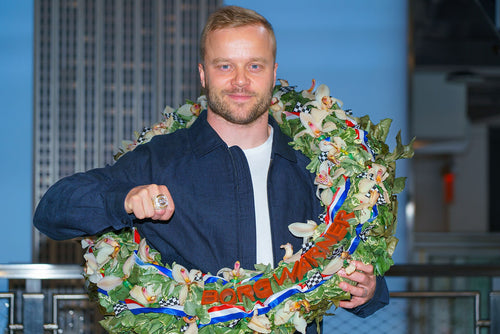
Felix Rosenqvist started fourth for Meyer Shank Racing, ran an alternate fuel strategy, and led for the first time on lap 154. Two late cautions set up a one-lap shootout. Malukas took the lead from Marcus Armstrong on the final lap while Rosenqvist ran third and side by side with Armstrong for most of that lap. Coming out of turn four, Rosenqvist got the run and beat Malukas to the line by 0.0233 seconds. It was his first Indy 500 and the second for Meyer Shank Racing, which also won in 2021 with Castroneves.
ALL THE WAY FROM VARNAMO, SWEDEN. Felix Rosenqvist wins the 110th Running of the Indianapolis 500.
- NTT INDYCAR SERIES (@IndyCar) May 24, 2026
The margin was not the only record that fell. The 2026 race produced 70 lead changes, the most in Indy 500 history, beating the 68 from Tony Kanaan's 2013 win. Alex Palou and Scott Dixon alone traded the lead 26 times, which broke the old record of 18 between the same two drivers, set by James Hinchcliffe and Ryan Hunter-Reay in 2016. Santino Ferrucci also went the full 500 miles for a record eighth straight year.
Speed Records: Fast Race, Faster Lap
The fastest Indy 500 ever run belongs to Castroneves, who averaged 190.690 mph over the full 500 miles in 2021 and finished in 2 hours, 37 minutes, 19 seconds. Kanaan's 2013 win is second at 187.433 mph, Ryan Hunter-Reay's 2014 win third at 186.563 mph, and Arie Luyendyk's 1990 win fourth at 185.981 mph. Only fifteen runnings have ever gone under three hours.
Race average and qualifying speed are two different worlds, because a qualifying run is four laps with an empty track and a car trimmed out for speed. The all-time qualifying lap record is still Luyendyk's 237.498 mph from May 12, 1996, and he went 239.260 mph in practice two days before that. The fastest pole run of the modern era is Scott McLaughlin's 234.220 mph four-lap average on May 19, 2024. For scale, Palou's 2026 pole was 232.248 mph and the 2026 race average was 162.021 mph, because cautions and traffic eat the difference.
One more number worth knowing if you are heading to the track: Team Penske has won the Indy 500 twenty times as an owner, more than anyone. Firestone has 77 wins on tires, Offenhauser 27 on engines, and Dallara 27 on chassis.
The Bottom Line
Indy rewards the driver who is in position on the last lap, not the one who led the most. Scott Dixon has led more laps at Indianapolis than any human being and has one win. David Malukas led the final lap of the closest Indy 500 ever and lost it in the last 300 feet. That is the whole race in one sentence.
Shop the Story

If the records book got you in the mood for May, here is the Indy gear we have in stock right now:
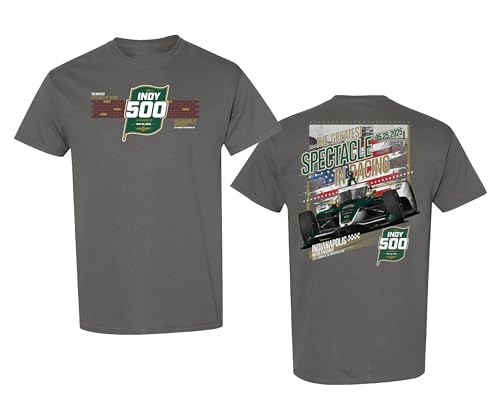
- Indianapolis 500 "Back Home Again" race tee
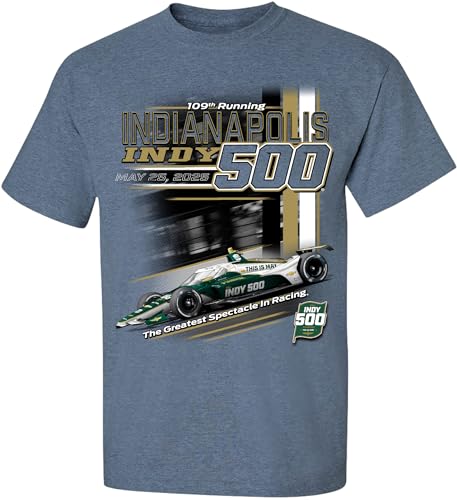
- Indianapolis 500 car and flag graphic tee
- Indianapolis 500 Snake Pit tee
- Indianapolis 500 race logo long sleeve tee
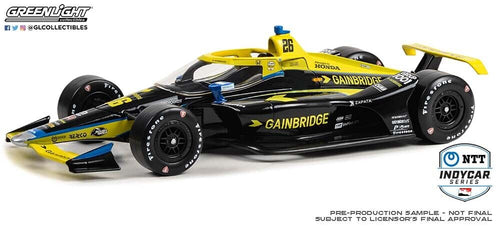
- Colton Herta No. 26 Andretti 1:18 IndyCar die-cast
Want more of the numbers behind Indianapolis? Read our Helio Castroneves four-win breakdown, our Felix Rosenqvist stats profile, and if you are going in May, our Indianapolis Motor Speedway fan guide covers the cooler and bag policy before you pack. The full IndyCar collection is here.