IndyCar Wheel Tethers Explained: Why the Wheels Stay On in a Crash
Welcome to the Happy Hour Racing IndyCar Tech Breakdown - one piece of IndyCar, explained in plain English every Wednesday. No engineering degree required.

The Short Version
IndyCar wheel tethers are thin straps made of a super-strong fiber called Zylon that tie each wheel corner of the car to the chassis. IndyCar says they can hold more than 22,000 pounds of force. Their whole job is to keep a 200 mph wheel from flying into the crowd when the rest of the car is busy breaking apart. The series has required them since 1999, and the last few years show both how well they work and the one way a wheel can still get loose.
Why IndyCars Are Built to Fall Apart
This sounds backwards, but an IndyCar is designed to shed parts in a crash. Every wing, nose and suspension arm that snaps off takes some of the crash energy with it, and that is energy that never reaches the driver. A car that stays in one piece hits harder.
The catch is obvious. If parts are meant to break off, something has to stop the heaviest ones from becoming missiles. On an open-wheel car the wheels sit out in the open, wrapped in a big tire, and at speed they carry a lot of energy. A loose wheel can bounce higher than a catch fence. That is the problem tethers solve.
The Crash That Started It
On May 1, 1999, the Indy Racing League ran at Lowe's Motor Speedway near Charlotte. On lap 62, a crash involving Stan Wattles and John Paul Jr. launched debris into the stands, including the right-rear wheel assembly from Wattles' car. Three spectators were killed, and the race was called off after 79 laps.
That same year the series started requiring wheel tethers attached to the chassis and suspension. IndyCar has said it was the first U.S. sanctioning body to mandate them.
How IndyCar Wheel Tethers Work
Picture the corner of the car. The wheel bolts onto a hub, held on by one big center nut (that is the nut pit crews spin off and on during a stop). The hub sits in a part called the upright, and the upright hangs off the suspension arms, which bolt to the chassis or gearbox.
In a hard hit, the suspension arms snap. Without a tether, the whole corner would leave. With one, a Zylon strap running from the corner back to the car catches it, like a dog leash catching a dog that just bolted. The wheel may be dangling, but it stays with the car.
Tethers Everywhere: Wings, Noses and More
Wheels came first, but they are not the only thing on a leash. IndyCar calls the whole package SWEMS, short for Suspension Wheel/Wing Energy Management System. It already included one or two straps running from the rear wing main plane to the transmission.
For 2016, IndyCar added Zylon tethers to more bodywork. The rear beam wing and rear wheel guards got tethered at every event. The nose got tethered at superspeedways 1.5 miles or longer. Dallara also designed a tether system for the front wing main plane at Indianapolis, Texas and Pocono. The goal, in the words of the series at the time, was to keep as much debris as possible off the track without causing more yellow flags.
Stronger Straps for 2023
Heading into 2023, IndyCar beefed up the rear wheel tethers. The new ones carried 60 percent more fiber, and IndyCar's Tino Belli told RACER the gains came from learning how things break. Tethers also wear out with time, so IndyCar cut their service life from three years to two and added a color code so crews can see when a set is due for replacement.

The 2023 Indy 500 Wheel
Then came the 2023 Indianapolis 500. Late in the race, on lap 184, Felix Rosenqvist's No. 6 McLaren hit the wall and Kyle Kirkwood's No. 27 Andretti car ran into it. Kirkwood's car went into the fence, and its left-rear wheel cleared the fence and a corner of the grandstand before landing on a fan's car in the parking lot. Nobody was seriously hurt.
Roger Penske, who owns both the series and the Speedway, first guessed the impact had torn the tether. IndyCar's own finding said otherwise: the tether did not fail. The tether held the suspension and upright to the car. What let go was the big retaining nut that holds the hub and wheel to the upright, so the wheel left without its leash.
IndyCar and Dallara recreated the crash at Dallara's headquarters in Italy. Dallara's CEO called it an unusual set of circumstances they had never seen before. The fix was a new rear retaining nut more than 60 percent stronger, made mandatory starting at the Iowa doubleheader that July.
INDYCAR and longtime partner Dallara have worked together to develop and produce a strengthened rear-wheel bearing retaining nut to debut at Iowa doubleheader.
- NTT INDYCAR SERIES (@IndyCar) July 19, 2023
Read More:
What to Watch For on a Race Weekend
Next time a car hits the wall hard, look at the corners. You will often see a wheel hanging at a crazy angle, flopping around but still attached. That is a tether doing its job. The suspension arms are gone, the wing is in pieces, and the heaviest part of the corner is still on its leash. It is one of the least glamorous parts on the car, and one of the most important for the people in the grandstands.
The Bottom Line
IndyCar wheel tethers turned a deadly lesson from 1999 into a strap that can hold more than 22,000 pounds. The 2023 Indy 500 proved the tether itself held, and it showed the system is only as strong as every link, which is why the nut got stronger too. When a wheel dangles after a crash instead of flying, that is safety working exactly as planned.

Want a 2023 Andretti IndyCar on your shelf, tethers and all? Grab gear from the IndyCar collection:
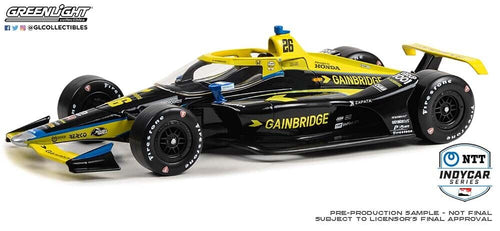
- Colton Herta No. 26 2023 Gainbridge Andretti Autosport 1:18 Diecast
- 109th Indianapolis 500 Car Flag Tee
- 109th Indianapolis 500 Track Navy Tee
- IndyCar 2025 Checkered Flag Sublimated Tee
Still curious how the rest of the car keeps drivers safe? Read our breakdown of the IndyCar survival cell. New IndyCar tech breakdowns drop every Wednesday.