Where the Sparks Come From: NASCAR's Skid Blocks and the Splitter, Explained
Welcome to the Happy Hour Racing Wednesday Tech Breakdown - where we take one confusing part of NASCAR and make it make sense. No engineering degree required.

The Short Version
Cup cars run so low that the front of the car drags the ground. NASCAR plans for that. Bolted under the splitter are small hard replaceable blocks the rule book calls skid blocks and the garage calls rub blocks. They hit the track so the expensive carbon fiber does not. Grind one across pavement at 180 mph and you get the shower of sparks under the car. They also do a second job nobody talks about. They are the surface NASCAR measures ride height from.
First, What the Splitter Actually Is
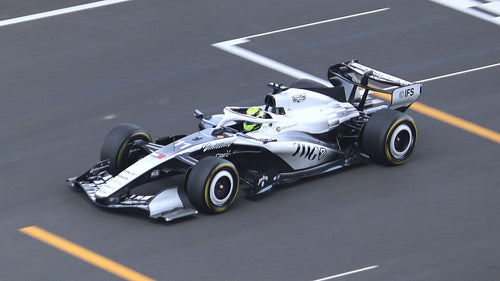
The splitter is the flat blade that sticks out under the front bumper. Its job is right there in the name. It splits the oncoming air. Some of it goes over the car, and the rest gets fed underneath into the underwing, which is the smooth floor that runs the whole length of the Next Gen car from the splitter back to the diffuser.
Think of it like the lip on a dustpan. The closer that blade sits to the pavement, the more front grip the car has, because it controls how much air gets under the nose and how fast it moves. So teams want it low. Low enough that it touches.
One wrinkle on today's car. The Next Gen splitter is stepped instead of straight across like the old Gen-6 splitter was. That step makes it impossible to seal the car to the ground, and that is on purpose. NASCAR would rather manage the air under the car than try to keep it out.
The Blocks That Take the Beating
Carbon fiber is strong but it does not like being sanded. Drag a bare carbon splitter across asphalt for 400 miles and you will wear a hole straight through it. So the bottom of the splitter gets fitted with small hard wear blocks. Think of them like the metal cleats on the bottom of a pair of work boots. The cleat takes the scuffing, and when the cleat is gone you replace the cleat, not the boot.
These blocks are hard metal for a reason. Aluminum is too soft and smears. Steel is heavy and it rusts. Across motorsport the metal of choice for a part that gets slammed into the ground over and over is titanium. It stays hard when friction heats it up, it does not rust, and it weighs less than steel. It also throws the brightest white sparks, which is a happy accident for anybody watching a night race.
So Where Do the Sparks Actually Come From?
Nothing is on fire. What you are watching is metal being sanded off at speed. Asphalt and concrete are rough, like very coarse sandpaper. When a hard metal block is pressed against that surface and dragged at 150 or 180 mph, friction shaves off microscopic shards of metal and heats them until they glow. Some of them actually burn in the air on the way out. That is a spark. Same thing happens on a bench grinder in your garage, just a lot faster and a lot more of it.
That is also why some tracks throw more than others. Smooth fast tracks where the car is loaded up and planted produce a steady stream. Bumpy tracks produce bursts, when the car slams down. Night races just make them easier to see.

Meet the Parts: Where the Blocks Live
They are not scattered randomly. There is a set under the front of the car just behind the front wheels, and one more at the right rear, ahead of the right-rear tire. The left rear does not get one. That is deliberate. Ovals turn left, so the car leans onto its right side in the corner and the right rear is what gets driven down into the track.
That layout matters because ride height is measured to the bottom of those blocks. Front ride height is the distance from the ground up to the front blocks. Right-rear ride height is measured to the right-rear block. There is no left-rear number at all, because there is no block there to measure to.
There is a hard limit on how far they can go. A splitter wear block can erode down to half its original thickness. Once it hits that, NASCAR requires it to be replaced. The blocks are a wear item with a service life, same as a brake pad.
Why Cup Cars Got So Low in the First Place
It was not always this way. For most of NASCAR history there was a minimum ride height rule and officials checked that the car was not sitting too low. In 2014 NASCAR threw that rule out for Cup everywhere except Daytona and Talladega. Teams could run the car as low as they could physically get it, and qualifying records fell at 17 of the 23 tracks on the schedule that year.
Dragging the splitter went from a mistake to a setup goal. Once the front of the car lives on the pavement, you need something down there built to be ground away.
What Changed in 2026
The splitter itself got the biggest rule tweak of the year, and it happened in the middle of the season. In mid-July, right before the North Wilkesboro race weekend, NASCAR told every team to add rigid struts to the front of the splitter so the blade could not move or deform under aerodynamic load at speed.
Here is why that matters for a part that lives on the ground. A splitter that flexes at speed behaves like a splitter mounted lower than the one NASCAR measured in the inspection line. The rule was about making every car behave the same at 190 mph as it did sitting still.
Starting with North Wilkesboro, the teams had to add some struts to the front of the splitter that should keep it from moving/deforming while at speed. Whether that was a significant advantage Toyota found is debatable in the garage. They still were strong at Indy.
- Bob Pockrass (@bobpockrass) July 30, 2026
Nobody got penalized over it. Joey Logano said it was about bringing the field to where everybody was doing the same thing. Penske crew chief Jonathan Hassler said the struts worked in Ford's favor because of the shape of their nose. Denny Hamlin was less thrilled, pointing out that any advantage his side had was earned.
The other 2026 change hit the blocks indirectly. Horsepower went up to 750 at every track a mile and a half or shorter, and five more tracks moved to the low-downforce short-track package. More power with less grip means more bouncing and more of the car getting put into the ground.
What You Will Actually See on Track
Once you know the blocks are there, the broadcast reads differently. A steady stream of sparks from one car and not the others usually means that team is running lower than everybody else and betting the blocks last. A burst in one corner and nothing anywhere else means the car is bottoming on a bump.
You will also see teams run a strip of brightly colored tape along the top edge of the splitter. That is not decoration. It lets the crew see from a distance where the splitter is sitting relative to the track.
The Bottom Line
Those sparks are not damage. They are a small block of hard metal doing the job it was bolted on to do, and NASCAR measures the whole car off the bottom of it.

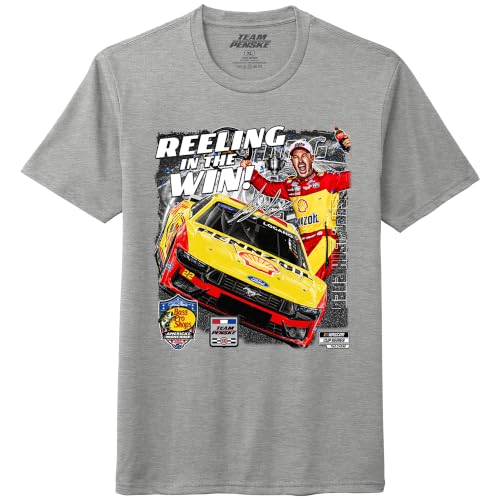
North Wilkesboro is where the splitter rule landed, and Joey Logano went out and won the race anyway. If you were watching that one, we have the shirt. Browse the rest of our driver collections and pick up something to wear to the next one. New tech breakdowns drop every Wednesday, so bookmark the blog and never get lost in the jargon again.