The Happy Hour Racing NASCAR rules breakdown - who can run for Rookie of the Year, the new start limits for 2027, and why a two-time Cup winner is not a rookie.

The Short Version
NASCAR Rookie of the Year rules got a hard line for 2027. A Cup Series driver can have no more than 12 prior Cup starts before the season they declare for the award. The limit is 10 starts in the O'Reilly Auto Parts Series and eight in the Craftsman Truck Series. Running full time for the first time is not enough on its own. A team has to apply, and NASCAR decides. The winner is the eligible rookie with the most points, scored the same way as the championship. The rule's first big casualty: Corey Heim, who goes full time with 23XI Racing in 2027 but already has too many Cup starts to be a rookie.
The 2027 Rookie of the Year Rules: The Start Limits
NASCAR's Mike Forde laid out the new criteria on the Hauler Talk podcast in August 2026. RACER's Kelly Crandall and Jayski both reported the numbers the same way:
- Cup Series: no more than 12 starts before the season you declare.
- O'Reilly Auto Parts Series: no more than 10 starts.
- Craftsman Truck Series: no more than eight starts.
The count is series by series. Starts in the O'Reilly Series do not count against your Cup number. That is why a driver can win a title in the O'Reilly Series and still be a Cup rookie the next year.
There is a second step that a lot of fans miss. Eligibility is not automatic. A driver does not become a rookie just by moving up and running every race. The team has to apply for the driver to be a Rookie of the Year contender, and NASCAR then considers the request. Heim is the proof. Forde said Heim could have run for Rookie of the Year in 2026 and simply did not apply.
What Changed From the Old Rookie Rules
For years the number to know was seven. The rule book language Jayski published in 2021 said a candidate could not have started more than seven Cup races in any prior season. Drivers who went over could still get in. A Rookie Panel could grant an exemption after looking at the driver's resume, and it typically gave a waiver to drivers who only slightly exceeded seven.
That old rule had other conditions too. The driver had to hold a Cup license, sign up to earn driver championship points, and could not have registered for the rookie program before, unless one earlier application was properly withdrawn.
Over time the process drifted into a case-by-case review. RACER reported that it led to some rookies with very few prior starts and others with a good number who were still declared eligible. Forde put it plainly. It got confusing for fans to understand how a driver with 20 starts the year before was still a rookie. So NASCAR put real numbers back on it. In Forde's words, the goal was to "make it easy for everybody."

How the Rookie of the Year Winner Is Decided
This part is simple now. The Rookie of the Year is the eligible rookie who scores the most points over the season.
NASCAR made that change in January 2018. Motorsport.com reported at the time that rookie points would match the system used for the series title, stage points included. Jayski's rookie records page describes the same thing. Every finishing position and every stage result counts the same in the rookie standings as it does in the championship. If you know how stage points work, you already know how rookies are scored.
It was not always this way. Before 2018 the rookie standings used their own scale, and a panel weighed in at the end of the season. RACER noted there was once a panel that picked the Rookie of the Year regardless of head-to-head stats. The points-only system took the judgment call out of it.
The same award exists in all three national series. Cup, O'Reilly and Truck each crown their own top rookie.
The Corey Heim Case
Heim is the reason this rule made headlines. He has been making Cup starts since 2024. Jayski counts three in 2024, four in 2025 and eight in 2026 through mid-August, for 15 total, with more scheduled after that. He also won twice in 2026, including the Brickyard 400 at Indianapolis.
In 2027 he moves to full time in the No. 67 Toyota for 23XI Racing. Under the old case-by-case approach, a first full-time season might have been enough to argue for rookie status. Under the new rule, 15 is over 12. RACER's headline said it directly: NASCAR's new definition rules Heim out for 2027.
The twist is that Heim was eligible for 2026 and never applied. So he will go down as a two-time Cup winner who never ran for Rookie of the Year.
Recent Cup Rookies of the Year
Connor Zilisch won the 2026 Cup award in Trackhouse's No. 88. He was the only rookie in the running all year, which made it the first uncontested Cup rookie race since Andy Lally in 2011. It was not an easy year. NASCAR.com reported he had eight DNFs through his first 24 starts. Our Zilisch 2026 report card goes deeper.
Before him, Shane van Gisbergen won the 2025 award with five wins, beating Riley Herbst. Carson Hocevar won in 2024, Ty Gibbs in 2023 and Austin Cindric in 2022.
The award has a strong track record. By Jayski's count, 13 Cup Rookies of the Year went on to win at least one Cup title. That list includes Richard Petty, Dale Earnhardt, Jeff Gordon, Tony Stewart, Joey Logano, Chase Elliott and Kyle Larson, the 2014 Rookie of the Year.
Who Could Be a 2027 Cup Rookie
NASCAR has not announced its 2027 rookie class. The obvious candidate is Jesse Love, the 2025 O'Reilly Series champion, who takes over the Wood Brothers' No. 21 Ford starting with the 2027 Daytona 500. Love had seven Cup starts when the team announced the deal in June 2026. His O'Reilly title does not count against him, because the limit only looks at Cup starts. Until his team applies and NASCAR signs off, though, he is a candidate on paper, not a declared rookie.
Austin Hill also runs his first full Cup season in 2027, in Richard Childress Racing's No. 33. He has driven that car since May 2026, which puts him well past 12 starts as well.
What Happened to the Yellow Rookie Stripes?
For decades, rookies ran two yellow stripes on the rear bumper so other drivers knew who was new. The stripes also showed up on veterans making their first start at a track. Starting with the 2025 season, NASCAR stopped requiring them in the Cup, O'Reilly and Truck series. Jalopnik, citing The Athletic, reported NASCAR's reasoning: at the highest levels of stock car racing, the stripes are no longer necessary. Teams are not banned from running them, and Dale Earnhardt Jr. was one of the loudest voices against losing the tradition.
Frequently Asked Questions
Who is eligible for NASCAR Rookie of the Year?
For 2027, a Cup driver can have no more than 12 prior Cup starts before the season they declare. The limit is 10 starts in the O'Reilly Auto Parts Series and eight in the Truck Series. The team must also apply, and NASCAR has to approve it.
How many starts can a NASCAR rookie have?
Twelve in Cup, 10 in the O'Reilly Series and eight in the Truck Series, counted in that series only. Before this rule, the old benchmark was seven starts in any prior season, with a panel able to grant exemptions.
Why is Corey Heim not eligible for Rookie of the Year?
He had 15 Cup starts from 2024 through mid-August 2026, three over the 12-start limit. He could have run for the award in 2026 but did not apply.
How is the NASCAR Rookie of the Year decided?
By points. Since 2018, rookies are scored the same way as the championship, stage points included, and the eligible rookie with the most points at the end of the season wins.
Who won 2026 NASCAR Cup Series Rookie of the Year?
Connor Zilisch of Trackhouse Racing. He was the only Cup rookie candidate in 2026.
Who will be the 2027 NASCAR Cup rookie?
NASCAR has not named its 2027 class yet. Jesse Love, moving to the Wood Brothers' No. 21, is the clearest candidate. Corey Heim and Austin Hill run their first full seasons in 2027 but are over the start limit.
Do NASCAR rookies still have yellow stripes?
Not by rule. NASCAR dropped the rookie stripe requirement in its three national series starting in 2025. Teams can still run them if they want.
Does a driver have to run every race to be Rookie of the Year?
The award goes to the rookie with the most points, so a full schedule is the realistic path. The application step matters too. A driver who never applies, like Heim in 2026, is not in the rookie standings at all.
The Bottom Line
Being new is not enough anymore. For 2027 a Cup rookie needs 12 or fewer prior Cup starts, a team that files the paperwork, and the most points among the class. That is why a two-time winner like Corey Heim will never wear the title, and why Jesse Love, with seven Cup starts at signing, is the name to watch.
More rules explainers: the Chase format, how qualifying works in 2027 and how charters work.
Gear Up

Gear for the rookies, past and future.
- Jesse Love #2 2025 Series Champion T-Shirt
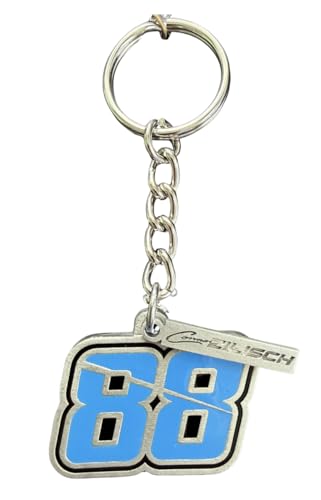
- Connor Zilisch #88 Signature Keychain
- Shane van Gisbergen #88 2025 Charlotte Roval Win T-Shirt
- Kyle Larson #5 2026 Kansas Clean Sweep T-Shirt
More in the race wins collection.