The Happy Hour Racing NASCAR rules breakdown - how the Cup Series sets its starting lineup every week, and the rainout rule that changes in 2027.

The Short Version
NASCAR qualifying sets the Cup Series starting lineup one car at a time against the clock. Most ovals give each driver one timed lap, short tracks give two, superspeedways run two rounds with a top-10 shootout, and road courses run timed group sessions. When rain cancels qualifying, the lineup comes from a formula. That formula is going away. Starting in 2027, a rained-out lineup will be set by owner points, period.
How NASCAR Qualifying Works at Each Track
The format depends on the kind of track. Here is the 2026 Cup Series rule book, Rule 7.5, in plain English.
- Most ovals: one round, one timed lap. That covers Charlotte, Chicagoland, Darlington, Kansas, Homestead-Miami, Indianapolis, Las Vegas, Michigan, Nashville, New Hampshire, Phoenix, Pocono, Texas and World Wide Technology Raceway. One shot. Miss it and you start where that lap puts you.
- Short tracks: one round, two timed laps. Bristol, Iowa, Martinsville, North Wilkesboro and Richmond. The faster of the two laps counts.
- Superspeedways: two rounds. Daytona, Talladega and Atlanta. Everyone runs one lap. The 10 fastest move on, their times are wiped clean, and a second lap sets positions 1 through 10.
- Road courses: one 20-minute session per group. Before it starts, NASCAR decides whether conditions are dry or wet, and which tires and equipment teams must use.
A few rules apply everywhere. A timed lap cannot start or end on pit road. Teams get one set of tires for qualifying unless NASCAR says otherwise. Once a car leaves the competitive side of pit road, it cannot come back and try again. If two drivers post the exact same speed, the tie goes to the car higher in the owner points standings, and if they are still tied, to the car that ran first.
Who Goes Out First and Why
The field is split into Group 1 and Group 2. The order comes from a number NASCAR calls the performance metric. It is a weighted score, and a lower score is better. NASCAR's qualifying-order posts describe it as 70 percent the car's finish in the previous race and 30 percent its spot in the current owner points standings.
The cars with worse scores go first. The cars that ran best last week go last. On ovals and short tracks, the cars still go out one at a time, so the groups only control the order, not who you are racing against. Your lap is your lap.
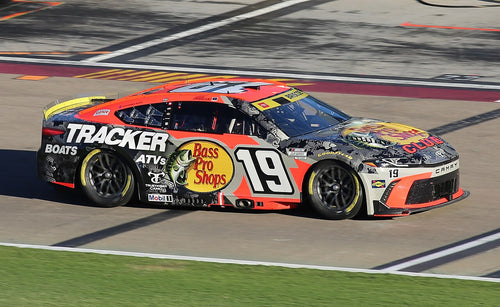
In The Chase, NASCAR adds another layer. Chase drivers are moved to the end of the line. At Phoenix this October, all 16 Chase drivers were scheduled after every non-Chase car, with Chase Briscoe out last.

Who Makes the Race
The Cup field is 40 cars. The 36 charter cars are guaranteed a starting spot no matter how slow they qualify. Open teams, the ones without a charter, fight for the last four spots. When more than 40 cars enter, the slowest open cars go home. If you want the full story on why charters matter, see our NASCAR charter system explainer.
Plenty of weeks, that cut never comes into play. For the Phoenix Chase race in October, only 37 cars entered, so NASCAR noted ahead of time that nobody would fail to qualify.
The Daytona 500 is its own animal. Single-car runs set the front row, then two 150-mile qualifying races set most of the rest. That process deserves its own breakdown, and it is coming before Speedweeks.
What Happens When Rain Cancels Qualifying in 2026
If qualifying starts but does not finish, the lineup comes from the last completed round. If no round is completed, the rule book hands the whole grid to the performance metric. The best score starts on the pole.
That means the 70 percent piece, last week's finish, carries most of the weight. Win last week and you start up front this week without turning a lap. Get caught in a wreck last week and you start deep in the field, even if your car is fast this week.
Open teams have their own rule when qualifying is canceled. Owner points decide which open cars get in. For races 2 and 3 of the season, last year's owner standings set eligibility for up to two open teams, and this year's standings handle the rest. From race 4 on, it is all current-year owner points.
NASCAR started using the metric to set rained-out lineups during COVID, when most race weekends had no practice or qualifying at all. In 2026, rain put it front and center. John Probst, NASCAR's president of event management, said on SiriusXM NASCAR Radio, "This year, I think we had four of our first six get rained out for qualifying." He added, "Then, you do see some of the potential unfairness."
What Changes in 2027
Confirmed: owner points replace the metric. Probst confirmed it on November 6, 2026. "What we're going to do for 2027 is line them up by owners' points," he said. "That will make it a little bit easier to explain to our fans, there's no math." NASCAR CEO Steve O'Donnell also acknowledged concerns about the old formula at his State of the Sport press conference that same day.
The practical effect is simple. A bad finish last week no longer sinks you on a rainy weekend. A team that has run well all season starts up front, and a team that got hot for one week does not jump the line. NASCAR has not yet said how it will handle the first races of 2027, when the current-year owner standings barely exist.
Not final: pit stop qualifying. Probst said NASCAR is "looking at that All-Star style qualifying where you actually have a pit stop," for what he called maybe "a very select few races" in 2027. No tracks have been named.
Not final: one round at superspeedways. Probst also floated dropping the second round at Daytona, Talladega and Atlanta. He said nothing is settled and NASCAR is still working through it with the teams. Until NASCAR publishes the 2027 rule book, the formats above are the ones in force.
Frequently Asked Questions
How does NASCAR qualifying work?
Cars run timed laps one at a time, and the fastest lap gets the pole. Most ovals give one lap, short tracks give two, superspeedways run two rounds with a top-10 final round, and road courses run 20-minute sessions by group.
How is the NASCAR starting lineup set if qualifying is rained out?
In 2026, the performance metric sets it: 70 percent the car's finish in the previous race and 30 percent its owner points position. Starting in 2027, NASCAR will line the field up by owner points standings.
What is the NASCAR performance metric?
A score NASCAR uses to set the qualifying order and, in 2026, rained-out lineups. It combines the car's finish in the previous race (70 percent) with its spot in the owner points standings (30 percent). Lower is better.
Why do the best cars qualify last?
The cars with the worst performance metric scores go first and the best go last. In Chase races, the Chase drivers are moved to the end of the order.
How many cars start a NASCAR Cup race?
Forty. The 36 charter cars are guaranteed a spot, and open teams fill the other four. The field can grow to 41 when NASCAR grants its Open Exemption Provisional.
Is NASCAR adding pit stops to qualifying in 2027?
Maybe. NASCAR's John Probst said an All-Star style format with a pit stop is being considered for a very small number of races. It had not been finalized as of mid-November 2026.
Does a driver have to qualify to race?
Charter cars are in no matter what. Open teams have to qualify fast enough when more than 40 cars enter. If qualifying is canceled, open teams get in based on owner points.
The Bottom Line
NASCAR qualifying is one car, one clock and usually one lap. The part that changes in 2027 is the rainy-day backup: no more formula built on last week's finish, just the owner points standings fans can already read.
More rules explainers: the 2026 Chase format, how charters work and the airflow rule that can wipe out a qualifying lap.
Gear Up

Qualifying is all about the pole. Here is gear for the drivers who know how to get there.
- Noah Gragson #10 2024 Pole Sitter T-Shirt
- Denny Hamlin #11 2026 All-Star Winner at Dover Shirt
- Ryan Blaney #12 2026 Quaker 400 Atlanta Win T-Shirt
- Chase Briscoe #19 2026 Charlotte Win T-Shirt
More in the race wins collection.