Why Your Favorite Track Races Different in 2026: The 750-Horsepower Change, Explained
Welcome to the Happy Hour Racing Wednesday Tech Breakdown - where we take one confusing part of NASCAR and make it make sense. No engineering degree required.

The Short Version
For 2026, NASCAR turned the power up and the grip down at a bunch of tracks. Cars at every track 1.5 miles or shorter now make about 750 horsepower instead of 670. At the same time, five tracks that used to run the "high-grip" aero kit switched to the "low-grip" kit. More power, less grip - that combination is designed to make cars harder to drive and easier to pass. Here's what that actually means.
Horsepower: How Hard the Engine Pushes
Think of horsepower as how hard the engine shoves the car forward. More horsepower means the car wants to accelerate harder and spin its rear tires more easily - like flooring a gas pedal on a wet driveway. Going from 670 to 750 doesn't sound huge, but at slower tracks where drivers are constantly getting back on the throttle off the corners, that extra shove makes the rear tires fight for grip. The driver has to be smoother and more careful, and that's the whole point: NASCAR wants the driver, not the car, to decide the race.
This power bump applies to every track 1.5 miles and shorter - short tracks and road courses. The big high-speed ovals like Daytona and Talladega aren't part of this change.
Downforce: Invisible Weight That Glues the Car Down
Now the grip side. As a race car moves, air flows over and under it. Engineers shape the car so that moving air pushes down on it. That downward push is called downforce - basically invisible weight that appears only when the car is moving fast. More downforce means the car sticks to the track and can rip through corners flat-out. Less downforce means the car slides around and the driver has to manage it.
Here's the part most fans don't realize: on today's Cup car, most of that grip doesn't come from the wing you can see - it comes from underneath the car.
Meet the Three Parts That Matter
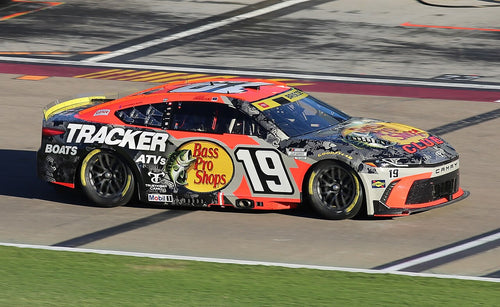
The splitter is the flat blade sticking out the front. It splits the oncoming air - some goes over the car, most gets fed underneath. It gives the front tires grip so the car turns.
The diffuser is the secret weapon. It's the angled section under the rear of the car, with small vertical blades called strakes. As air rushes out from under the car, the diffuser speeds it up and pulls it out the back. Fast-moving air under the car creates low pressure - and that low pressure literally sucks the car down onto the track. Engineers call this "ground effect." It's the same idea that holds a fast-moving sheet of paper against a desk.
The spoiler is the fin across the back you can actually see. Air piles up against it, pushing the rear of the car down and keeping it planted.
So What Actually Changed at Those Five Tracks?
Five tracks - Bristol, Darlington, Dover, Nashville Superspeedway, and World Wide Technology Raceway (Gateway) - moved from the high-downforce "intermediate" kit to the low-downforce "short-track" kit. The short-track kit uses a shorter 3-inch spoiler and a diffuser with fewer strakes. Fewer strakes and a smaller spoiler mean less suction and less rear grip.
Put the two changes together - more horsepower, less downforce - and you get a car that wants to spin its tires and slide through corners. Drivers can't just mash the gas and hang on. They have to feel the car, pick their line, and manage the throttle. When grip goes down, driver skill goes up, and that usually means more passing and more mistakes to capitalize on.
Why Fans Should Care About "Dirty Air"
You'll hear drivers complain about dirty air. When you're right behind another car, you're driving through the messy, churned-up air it leaves behind. That disturbed air robs the chasing car of downforce, so it can't turn as well - which is why a faster car sometimes gets stuck behind a slower one. Lowering the overall downforce is NASCAR's attempt to shrink that problem, so the car behind can actually complete the pass instead of stalling out in traffic.
The Bottom Line
2026's formula is simple to remember even if the engineering isn't: more power, less grip, harder to drive. If the racing at Bristol, Darlington, Dover, Nashville, and Gateway feels more slippery and more aggressive this year, now you know exactly why - and you can explain it to the person next to you on the couch.
Got a driver you ride with through every slippery short-track restart? Rep them. Browse our driver collections and wear your colors at the next watch party. New tech breakdowns drop every Wednesday - bookmark the blog and never get lost in the jargon again.